

Key takeaways:
- One whole wheat roti (approx. 35g in weight) has 92 calories.
- The calories in one roti will vary with its size and what you top it with.
- Roti can be made from various flours, including rice, jowar, bajra, and millet.
- Multigrain rotis are more nutritious than whole wheat rotis.
Roti, also known as chapati, phulka, or poli in various regions of India, is a flatbread made with whole wheat flour, water, salt, and a small amount of fat (oil/ghee).
But like most fitness enthusiasts, you are probably looking at the hot roti, topped with ghee, and wondering whether even one roti will add a few grams to your weight.
But does this mean that roti isn’t good for you? This is far from the truth.
Maybe you are struggling to count the calories in one roti — and that is stopping you from enjoying a satisfying, nostalgia-filled meal.
If you are watching your weight, read on to discover how many calories one roti has, how it benefits your health, and how to fit it into your weight loss plan.
How many calories does one roti (chapati) have?
One medium-sized roti (35g) has 92 calories.
But since rotis come in varied forms and sizes, it is essential to know how many calories all these different rotis have.The calorie count for a roti/chapati will change if its size differs or it is topped with add-on calories.
Calories in roti without ghee will be less than calories in roti with ghee. Butter on roti makes a world of difference, too!
All of it boils down to how you prefer to eat your rotis .
Want to know more about calories in a roti and how to pair it well with other foods? Check out this quick reel below.
The table below illustrates how many calories different rotis have:
| Roti type/serving | Approx. weight | Calories (kcal) |
|---|---|---|
| 1 plain whole wheat roti | 35g | 92 |
| ½ plain whole wheat roti | 17.5g | 46 |
| 2 plain whole wheat rotis | 70g | 184 |
| 3 plain whole wheat rotis | 105g | 276 |
| 4 plain whole wheat rotis | 140g | 368 |
| 6 plain whole wheat rotis | 210g | 552 |
| 1 plain whole wheat roti topped with ghee | 35g | 137 |
| 1 plain whole wheat roti topped with butter | 35g | 111 |
However, the nutritional value of a roti does not start or end with its calorie count. To know how healthy a typical whole wheat roti is, it is important to understand its nutritional value.
Let’s see the nutrients in one roti [1]*:
*The values discussed here are for one medium-sized (35g), whole wheat roti.

Did you know?
Multigrain rotis are more nutritious[2] compared to regular wheat rotis. They are a blend of whole grains like wheat, jowar , bajra , and more.
With a moderate glycaemic index (55-69) and 70-85 calories per multigrain roti, they prevent large spikes in blood sugar.
What are some healthy alternatives to whole wheat roti?
Rotis are largely made with wheat flour, but it isn’t exactly the healthiest option, nor is it the only kind of flour available. .
Below, check out some healthier alternatives to whole wheat roti. They are low in calories and offer various health benefits.
8 healthy alternatives to whole wheat rotis in India
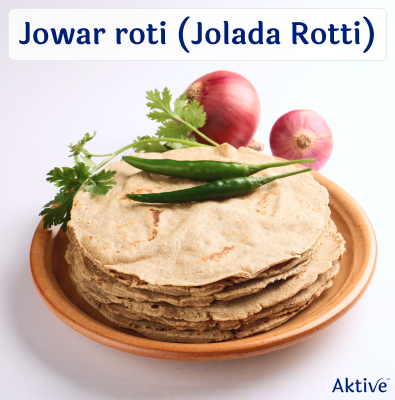
1. Jowar roti (Jolada roti ) :
- Thick roti made from Jowar (sorghum)
- Gluten-free, fibre-rich, low glycaemic index
- Calories: 56.8 kcal
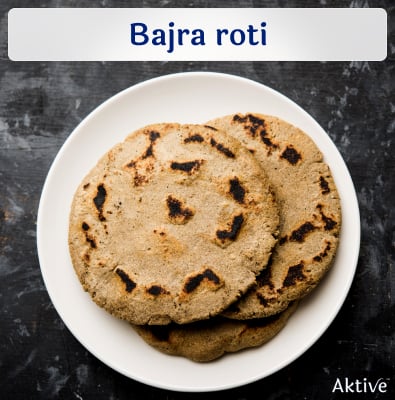
2. Bajra roti :
- Made from bajra (pearl millet)
- Rich in fibre, minerals, antioxidants, and omega-3 fatty acids
- Calories: 79.63 kcal
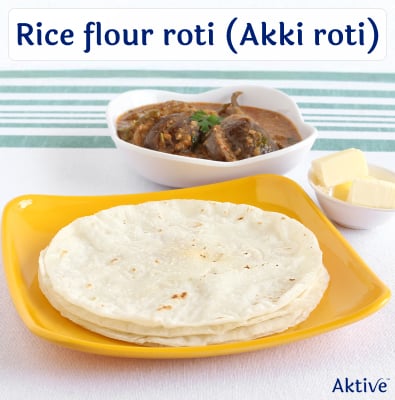
3. Rice flour roti (Akki roti ) :
- Gluten-free roti
- Soft and easy to digest
- Calories: 63.65 kcal
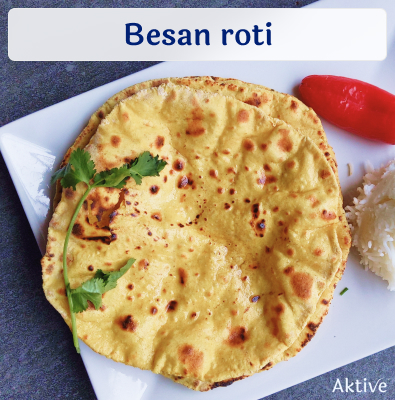
4. Besan roti :
- Made using chickpea flour (besan)
- Rich in protein and fibre
- Calories: 86.21 kcal
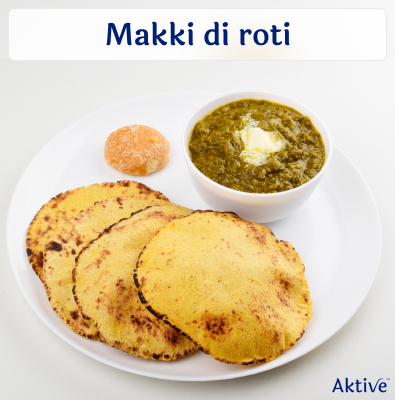
5. Makki di roti :
- Made from maize (cornmeal)
- Rich in vitamins, minerals, and dietary fibre
- Calories: 90 kcal
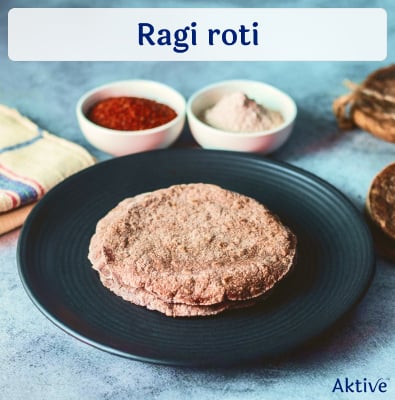
6. Ragi roti :
- Made from finger millet (ragi)
- High in protein, fibre, calcium, and iron
- Calories: 76.53 kcal
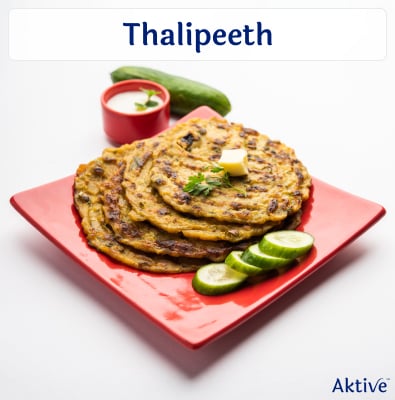
7. Thalipeeth :
- Flatbread from Maharashtra
- Made with a mix of Jowar , bajra, and aata
- Calories: 84 kcal
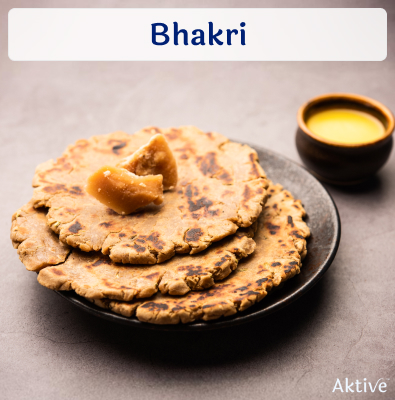
8. Bhakri :
- Thick flatbread popular in Gujarat
- Made from whole wheat/millet flour
- Calories: 63.44 kcal
The big question: Will roti make me fat?
The short, and perhaps the only answer you need to hear — No, it doesn’t!
The answer is also the same for mangoes, ghee, avocados, parathas, or basically anything you eat.
All you need to do is follow healthy practices like portion control, balanced workouts, getting a good night’s sleep, and maintaining a calorie deficit.
So, is roti healthy?
Yes!
Fitness and lifestyle coach Arjhan Rai says, “Roti is just a food. It's not going to make you fat or thin. You need to understand your calorie intake, and then you can eat whatever you want and still lose weight.”
Who should avoid eating roti?
While most people enjoy eating wheat rotis, there are certain instances where it is helpful to seek alternatives:
- Those affected with gluten sensitivity or celiac disease (an autoimmune disorder that damages the small intestine).
- People with diabetes.
- Weight-conscious individuals following a low-carb or keto diet.
- Wheat allergy or non-celiac wheat sensitivity[3] - An allergic reaction can happen to any kind of component in the wheat grain.
It may sound similar to gluten sensitivity, but the latter condition is specific to the protein itself and presents as gastric discomfort.
How to make your rotis healthier?
Whether roti is healthy or not has been a very controversial topic in health circles. But that doesn’t mean we can’t make it any healthier.
Curious how to do so? Check out these super useful tips to explore healthy alternatives to roti:
- Use less ghee/oil while roasting your roti for less fat content
- Cook rotis thoroughly on a hot tawa
- Make rotis with different whole grain flours like oats, millets, besan, etc
- Add greens like palak, methi, spring onion, or mung to the dough for more roti nutrition
- Eat rotis with protein-rich sides like paneer bhurji, egg bhurji, dal, or sabzis . Know more about how much protein and calories does 100g paneer have?
- Add chia seeds and flaxseeds for more roti protein. Discover how chia seeds help with weight loss too.
Wrapping it up
When eaten right, a roti nourishes you with essential nutrients and keeps you energised throughout the day.
However, like any food that is mostly carbs, pair it with sufficient protein, fibre, and fats to balance your meals and avoid excess snacking.
While making your rotis, prefer whole grain varieties over refined atta whenever possible, and you are good to go!
Ready to achieve your weight loss goals?
Finding the perfect balance in your diet is just one part of your weight loss plans. If weight management is on your to-do list, Aktive is here for you.
Our experts understand that every person is unique.
With Aktive, you can enjoy satisfying meals and still reach your goals. Our evidence-based plans help you lose weight in a way that fits naturally into your lifestyle.
Check if you are eligibleFAQs
-
Can multigrain rotis help with weight loss?
-
Are multigrain rotis gluten-free?
-
How does the size of a roti affect its calorie count?
-
What’s healthier: Roti or rice?
-
Is it okay to eat roti every day?
-
Is ghee roti bad for you?
-
How many calories are in a plain roti with sabzi (vegetable curry)?
-
How many rotis should I eat for weight loss?
-
Is roti good for diabetes?
-
What are some low-calorie side dishes to pair with roti ?
-
Can you freeze rotis to save cooking time during the week?
-
How much protein does a roti have?
References:
- [1] Gudisa, P., & Rai, P. K. (2023). A REVIEW ON THE INDICATION AND CONTRAINDICATION FOR THE CONSUMPTION OF ROTI, PHULKA, PARANTHA, CHAPATI AND POORI AS PATHYA AND APATHYA IN THE SHADRTUS W.S.R TO THE NUTRITIVE VALUES. In World Journal of Pharmaceutical Research, World Journal of Pharmaceutical Research (Vol. 12, Issue 11, pp. 606–619) [Journal-article]. https://doi.org/10.20959/wjpr202311-28854
- [2] Nagaraju, R., Sobhana, P. P., Thappatla, D., Epparapalli, S., Kandlakunta, B., & Korrapati, D. (2020). Glycemic index and sensory evaluation of whole grain based multigrain Indian breads (ROTIS). Preventive Nutrition and Food Science, 25(2), 194–202. https://doi.org/10.3746/pnf.2020.25.2.194
- [3] Khan, A., Suarez, M. G., & Murray, J. A. (2019). Nonceliac gluten and wheat sensitivity. Clinical Gastroenterology and Hepatology, 18(9), 1913-1922.e1. https://doi.org/10.1016/j.cgh.2019.04.009